
Commercial Restroom Preventive Maintenance Schedule: Daily, Weekly, Monthly, Quarterly & Annual Checklist
Commercial touchless faucets and automatic soap dispensers should be managed as maintainable building assets—not simply cleaned when they look dirty or repaired only after they fail. This preventive-maintenance schedule organizes routine inspection of sensors, nozzles, faucet outlets, batteries, AC power, soap reservoirs, pumps, tubing, MultiFeed components, leaks, spare parts and system documentation for airports, stadiums, hospitals, universities, office buildings, transportation facilities and other high-traffic commercial restrooms.

The Goal of Preventive Maintenance
Manufacturer Instructions Come First
A facility-wide maintenance schedule should never override the service instructions for the exact installed product.
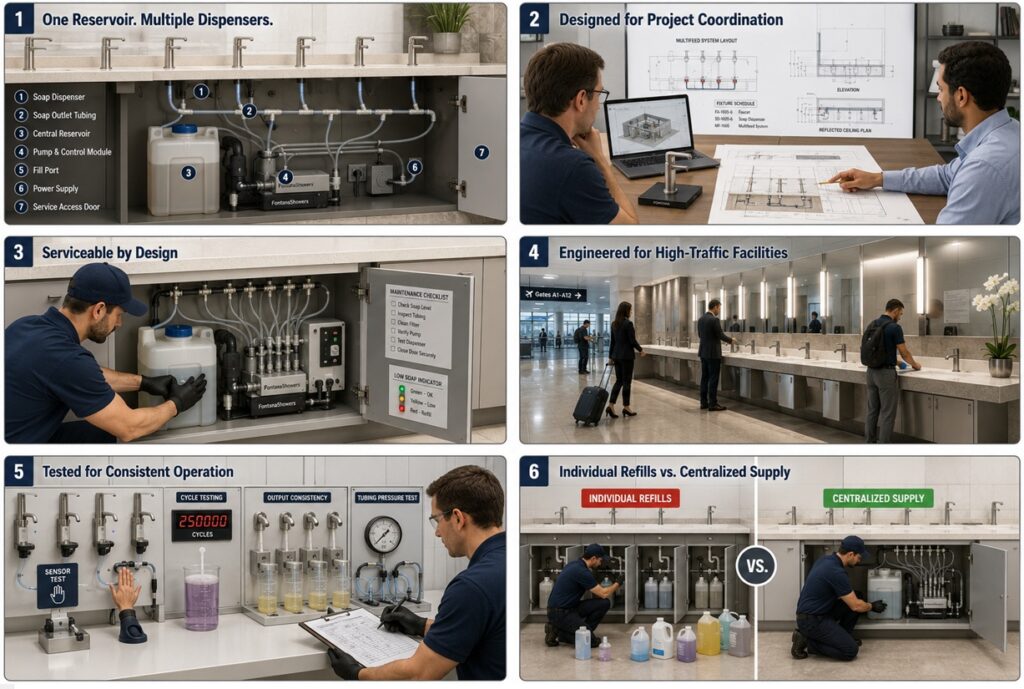
Fontana’s current MultiFeed engineering guidance states that facility teams should periodically inspect soap levels, connections, tubing condition, pump operation, dispenser output and service-area cleanliness. It also says that flushing, cleaning, component replacement and soap-change procedures should follow the instructions for the selected system rather than a generic maintenance schedule.
Fontana MultiFeed™ Engineering
Daily / Routine Cleaning-Round Checklist
Why Daily Visual Checks Matter
Fontana’s current automatic-soap service guidance begins troubleshooting by checking power, reservoir, pickup tube and nozzle before progressing to more complex service. It also recommends clearing soap buildup and verifying sensor condition.
Fontana Soap Dispenser Service Guide
Weekly Checklist
Automatic Soap Dispenser Weekly Test
| Test | Normal Observation | Potential Problem |
|---|---|---|
| Hand enters sensor zone | Consistent activation | Dirty sensor, power issue or detection problem |
| Pump operates | Predictable sound/output | Air, blockage, wrong soap or pump problem |
| Soap exits nozzle | Consistent dose | Nozzle buildup or supply-path problem |
| Reservoir level | Above facility reserve threshold | Refill required |
| Soap path | No visible leaks | Loose fitting, tube damage or connection issue |

Monthly Checklist
Battery-Powered Dispensers
Fontana’s current reset guidance says battery-powered models should be checked for correct installation and polarity, with weak batteries replaced when necessary to restore stable sensor performance.
Quarterly Checklist
Quarterly MultiFeed™ Inspection
For a centralized soap-distribution system, the maintenance team should think beyond the dispenser head.
| Component | Inspection Focus |
|---|---|
| Central Reservoir | Soap level, cleanliness, mounting, access and signs of leakage. |
| Pump Assembly | Consistent operation, noise, serviceability and accessible placement. |
| Distribution Manifold | Connections, identification and accessibility. |
| Feed Tubing | Kinks, compression, sharp bends, damage and secure routing. |
| Dispensing Heads | Sensor response and consistent soap output. |
| Service Area | Clear access without unrelated storage blocking equipment. |
Fontana’s current MultiFeed planning page specifically identifies soap levels, connections, tubing condition, pump operation, dispenser output and service-area cleanliness as items for periodic facility inspection.
MultiFeed Maintenance & EngineeringAnnual Checklist
Serviceability Reduces Downtime
Preventive maintenance becomes much more effective when the equipment is designed to be serviced.
The current Fontana Milan commercial dispenser provides an especially useful example: its product documentation describes a serviceable pump architecture with replaceable pump modules, accessible tubing paths and minimal-tool parts replacement.
Recommended Facility Maintenance Log
| Field | Example Entry |
|---|---|
| Date / Time | ________ |
| Restroom / Fixture ID | ________ |
| Product Model | ________ |
| Reported Symptom | No soap / no water / false activation / leak / weak flow / other |
| Inspection Finding | ________ |
| Corrective Action | ________ |
| Part Replaced | ________ |
| Labor Minutes | ________ |
| Downtime | ________ |
| Returned to Service | YES / NO |
| Repeat Failure? | YES / NO |
Preventive Maintenance KPI Dashboard
EPA Facility-Management Framework
EPA WaterSense recommends that commercial and institutional facilities actively manage water-consuming equipment through planning, monitoring, maintenance and leak detection rather than waiting for utility costs or failures to reveal problems.
WaterSense at Work includes operation-and-maintenance guidance, retrofit and replacement considerations, and methods for calculating potential water, energy and dollar savings.
EPA WaterSense at Work EPA Facility O&M ToolsWhy Monitoring Matters
EPA describes commercial and institutional water tracking as a way to identify leaks, abnormal consumption and malfunctioning equipment. It also recommends regularly checking fixtures and automatic sensors for correct operation.
Recommended Maintenance Frequency Matrix
| Task | Daily | Weekly | Monthly | Quarterly | Annual |
|---|---|---|---|---|---|
| Soap availability | ✓ | ✓ | ✓ | ✓ | ✓ |
| Visible water/soap leaks | ✓ | ✓ | ✓ | ✓ | ✓ |
| Sensor cleanliness | Visual | ✓ | ✓ | ✓ | ✓ |
| Nozzle condition | Visual | ✓ | ✓ | ✓ | ✓ |
| Automatic activation test | Problem units | ✓ | ✓ | ✓ | ✓ |
| Battery/power review | Fault-based | — | ✓ | ✓ | ✓ |
| Mounting stability | Visual | — | ✓ | ✓ | ✓ |
| Central reservoir/pump | Visual | ✓ | ✓ | Detailed | Detailed |
| MultiFeed tubing/manifold | Visible faults | — | Visual | Detailed | Detailed |
| Failure-rate analysis | — | — | Review | ✓ | ✓ |
| Spare-parts inventory | — | — | ✓ | ✓ | Full review |
| TCO review | — | — | — | Optional | ✓ |
What Architects & MEP Engineers Should Hand Over
Verified Fontana Commercial Maintenance Resources
Current Fontana automatic and touchless dispenser collection for high-traffic commercial washrooms.
Automatic Soap DispensersCurrent Fontana commercial sensor-faucet family for public and large-scale projects.
Commercial Touchless FaucetsCentralized reservoir, pump, manifold, tubing, commissioning and maintenance guidance.
MultiFeed EngineeringCommercial automatic dispenser with replaceable pump modules and accessible tubing paths.
Milan CommercialCurrent guidance covering power, sensor cleaning, nozzle clearing, soap compatibility and priming.
Service GuideCurrent Fontana project resources for specification, BIM and architectural coordination.
AEC ResourcesPreventive Maintenance FAQ
How often should commercial automatic soap dispensers be inspected?
High-traffic units should receive routine visual checks as part of custodial rounds, with deeper inspection according to the exact manufacturer instructions, traffic level, soap formulation and observed performance.
Should soap dispenser sensors be cleaned weekly?
A weekly inspection/cleaning schedule can be a useful facility-management baseline for high-use restrooms, but the exact cleaning method and interval should follow the selected manufacturer’s instructions.
What should be checked when a soap dispenser stops working?
Current Fontana service guidance recommends checking power, the reservoir, pickup tube, nozzle, sensor window, soap formulation, pump priming and possible air gaps before escalating the repair.
Should batteries be replaced monthly?
Not automatically. Battery life varies by model and traffic. Facilities should use manufacturer guidance, battery indicators, operating history and actual performance rather than applying one universal monthly replacement schedule.
Does MultiFeed require preventive maintenance?
Yes. Centralized systems require periodic inspection of the reservoir, pump, manifold, tubing, connections, dispenser output and service access.
How often should MultiFeed tubing be inspected?
Facilities should periodically inspect tubing condition and connections, while exact intervals and service procedures should follow the technical documentation for the installed system.
Why track mean time to repair?
Repair time affects fixture availability. A component that can be restored quickly may produce less operational impact than a similarly reliable component that requires lengthy service.
Should facilities keep replacement pumps on site?
Large standardized installations may benefit from stocking manufacturer-supported pump modules when actual failure history, lead time and downtime risk justify it.
What belongs in an annual restroom maintenance review?
Review fixture inventory, failure frequency, downtime, power-related issues, pump and sensor replacements, soap compatibility, refill labor, spare parts, MultiFeed zones, documentation and lifecycle cost.
Should preventive maintenance schedules be identical for every restroom?
No. An airport or stadium restroom may require more frequent inspection than a low-traffic office lavatory. Maintenance frequency should reflect actual use, risk and manufacturer instructions.
Final Recommendation: Build a Maintenance System, Not Just a Checklist
The strongest commercial preventive-maintenance program combines inspection, measurement, documentation and rapid restoration.
For large commercial facilities, the goal should be to detect small problems during scheduled rounds, restore failed fixtures quickly and use maintenance history to make future touchless faucet, automatic soap dispenser and MultiFeed systems easier to operate over their full lifecycle.
Fontana Commercial Restroom Preventive Maintenance Evidence — Touchless Faucets, Automatic Soap Dispensers & Integrated Hygiene Systems
Preventive maintenance for a touchless restroom should treat the faucet and soap dispenser as operating assets rather than decorative accessories. The review evidence below highlights calibration, sensor behavior, shutoff, cleaning exposure, refill labor, service interruption, solenoid operation and high-use facility conditions. The goal is to help facility managers, MEP teams, contractors and specifiers turn review observations into a structured O&M checklist without overstating customer testimony as engineering test data.
Inspect
Look for low power, blocked outlets, empty reservoirs, sensor residue, leaks, unstable mounting and recurring faults.
Clean & Verify
Use finish-compatible methods, avoid saturating electronics, then confirm sensor range, water flow, shutoff and soap output.
Measure & Improve
Track downtime, MTTR, refill labor, repeat failures, spare-part use and product-family service burden.
Selected Preventive-Maintenance Review Evidence

Fontana Automatic Commercial Hands Free Sensor Faucet
Lower Calibration Problems
Seventeen faucets installed across transportation and healthcare restroom retrofits were reported to maintain stronger infrared stability, smoother stream control and more reliable shutoff behavior than earlier touchless systems. Initial sensitivity adjustments were required on several shallow sinks, after which activation-related service requests declined.

Fontana Brio Commercial Chrome Touchless Volume Automatic Sensor Hands Free Faucet
Minimal Flow Interruptions
The review compares this system with earlier fixtures that experienced unstable flow regulation, delayed infrared response and inconsistent shutoff across healthcare and executive-office projects. Once basin depth and wall-position sensitivity were refined, valve consistency and infrared timing remained dependable across operating facilities.

Commercial Champagne Touchless Sensor Faucet
Smart Champagne Touchless Faucet for Public Restrooms
A smart sensor-activated touchless faucet designed for public restrooms and high-traffic environments. The AC/DC powered system ensures consistent performance, while hands-free operation improves hygiene and prevents cross-contamination. Built for long-term deployment with minimal maintenance downtime.

Fontana Touchless Faucet and Soap Dispenser System
Great For Clinics
Our team specified this touchless faucet and soap dispenser system for a medical clinic renovation, and it has performed consistently well for over 6 months. The infrared sensor responds accurately without delays, which is important in hygiene-focused healthcare environments. Staff appreciated the convenience of the fully touchless setup, especially during high patient traffic periods. Water flow remains steady while helping reduce unnecessary water usage, and the commercial-grade finish has held up very well under continuous cleaning. Compared to other sensor fixtures we’ve worked with, this system feels much more reliable for long-term healthcare applications.
Fontana Platinum Automatic Faucet with Integrated Soap Dispenser
Adds a Touch of Luxury
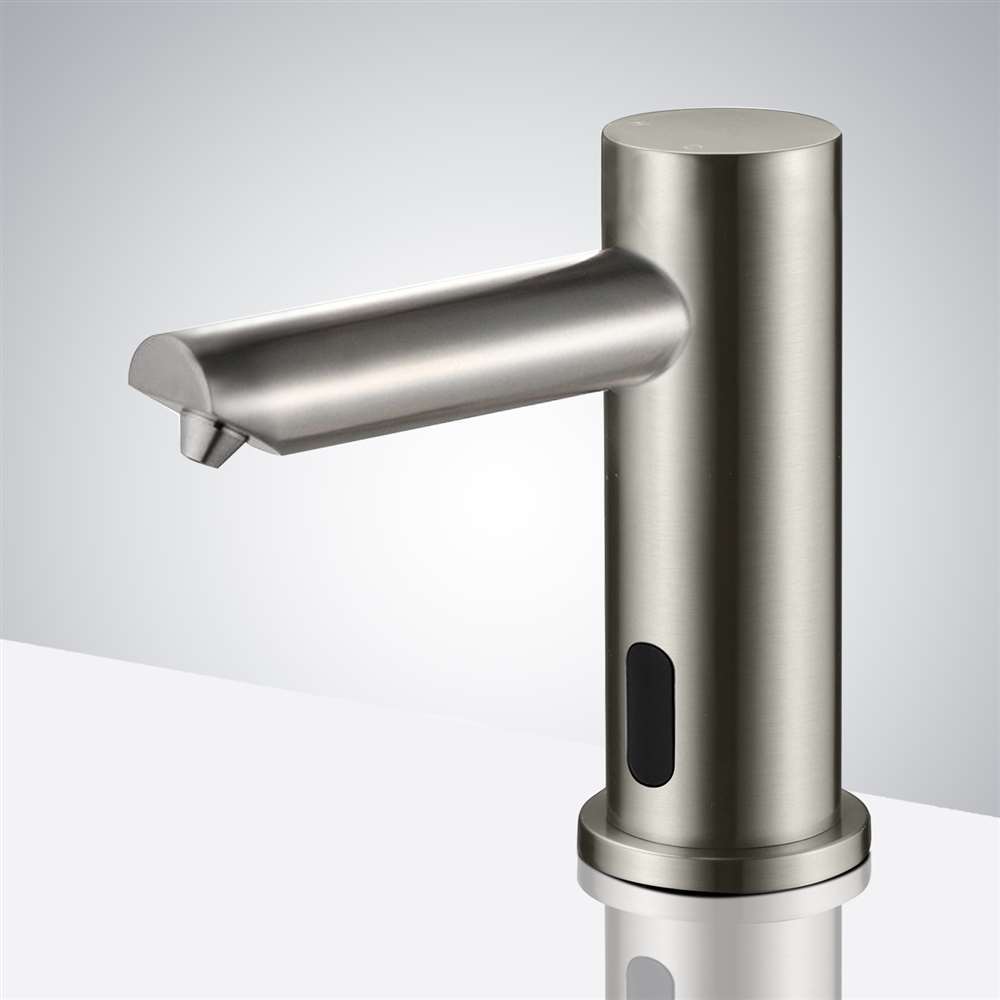
We selected the Fontana Platinum Automatic Faucet with integrated soap dispenser for a luxury convention center project in Singapore. The faucet’s solenoid valve system was rated for over 500,000 cycles, giving confidence in long-term durability under intense usage. The soap dispenser included a quick-refill mechanism, minimizing service interruptions. Both components utilized independent infrared sensors, reducing false activations and ensuring smooth coordination. Contractors noted that the deck-mounted design saved countertop space and simplified plumbing alignment. This dual fixture delivered not only functional convenience but also efficiency gains for facility operations, meeting the performance criteria outlined in our specification.
Fontana Matte Black Touchless Sensor Faucet
Design + Performance
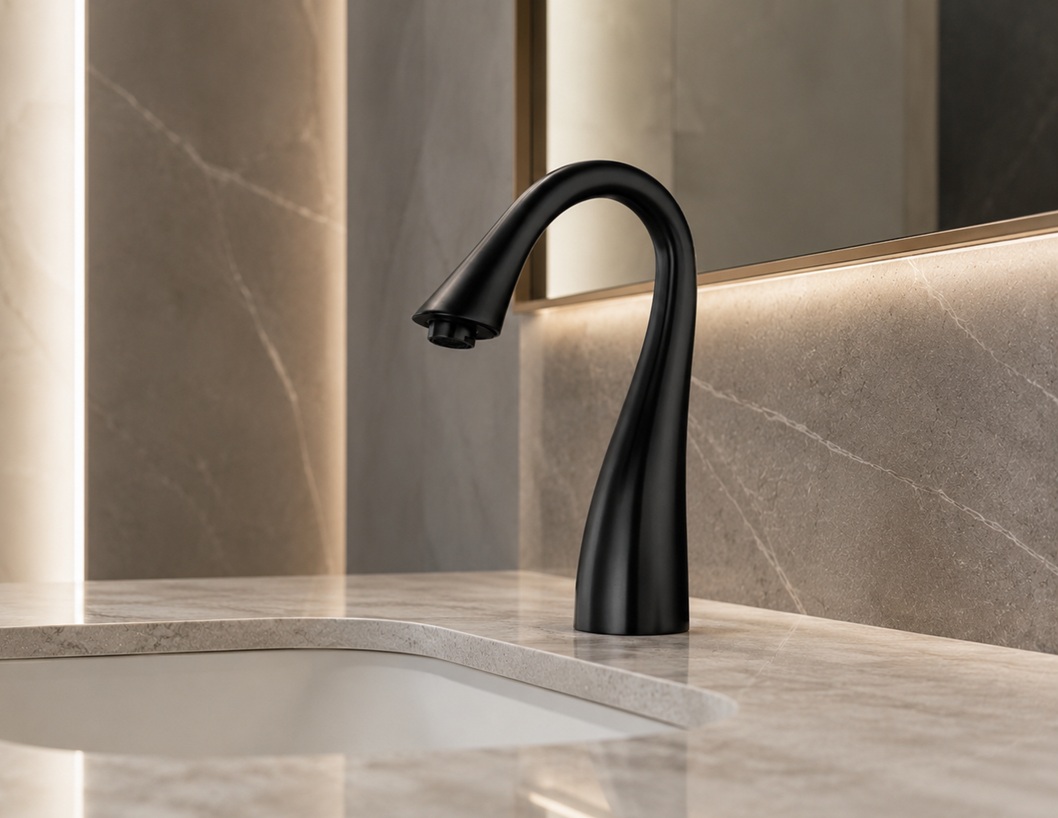
Matte black touchless fixtures often look great but fail when cleaning protocols get aggressive—this one holds up well with proper finish-safe care. Sensor response is quick, shut-off is predictable, and daily use doesn't feel laggy. Fontana's support gave clear guidance on commissioning and finish maintenance, and the warranty positioning adds confidence for premium commercial interiors.
Preventive-Maintenance Evidence Matrix
| Product | Asset Type | Maintenance Implication | Helpful |
|---|---|---|---|
| FS2236 | Touchless Faucet | Record final sensitivity settings; review recurring activation complaints; verify sensor range and shutoff after cleaning or basin changes. | 1 |
| FS2361TF | Touchless Faucet | Trend pressure/flow complaints, confirm shutoff timing, and preserve commissioning settings after basin or wall-finish work. | 2 |
| BS20021CP | Touchless Faucet | Include power status, sensor cleanliness, accessible service components and out-of-service events in the facility maintenance log. | 8 |
| FS10237 | Faucet + Soap System | Coordinate sensor cleaning, finish-safe chemistry, soap-level/refill checks and water-control verification within the same preventive-maintenance round. | 8 |
| FB505S | Faucet + Soap System | Track refill labor, service interruptions, false activations and solenoid/sensor service events as one coordinated sink-station asset. | 6 |
| FS-1096MB | Touchless Faucet | Use finish-compatible cleaners, keep sensor windows dry/clean, and retest activation and shutoff after deep cleaning. | N/A |
Commercial Restroom Preventive-Maintenance Schedule
The intervals below are organizational categories for facility planning, not universal mandatory service frequencies. Actual intervals should follow the exact product documentation, traffic, water quality, soap formulation, cleaning exposure and observed performance.
| Interval | Suggested Inspection / Service Focus | Facility Objective |
|---|---|---|
| Daily / Routine Rounds | Check fixture availability, visible leaks, faucet outlet condition, dispenser soap level, obvious nozzle blockage, sensor-window residue and unusual activation behavior. | Detect small failures before they become restroom closures or user complaints. |
| Weekly | Clean sensor windows and nozzles with appropriate materials; inspect sink decks and surrounding splash zones; confirm faucet shutoff and soap dose consistency. | Residue, soap buildup and aggressive cleaning can affect sensor and finish performance. |
| Monthly | Review battery/AC power status, mounting stability, approved soap formulation, reservoir condition, faucet scale/mineral accumulation, repeat faults and spare-part availability. | Converts reactive service into documented condition-based maintenance. |
| Quarterly | Review failure rate, MTTR, refill labor, soap consumption, out-of-service events and spare parts; inspect pumps, sensors, power components, tubing and fittings. | Identifies recurring failure modes and inefficient service practices. |
| Annual | Review inventory, downtime, repair labor, sensor/pump replacements, power issues, soap compatibility, refill strategy, documentation and lifecycle cost. | Feeds operational evidence back into procurement and future specifications. |
Touchless Faucet Maintenance Priorities
Sensor window: keep clean without scratching or saturating electronics. Power: verify battery condition or stable electrical supply. Hydraulics: inspect filters, strainers, aerators and abnormal flow. Solenoid / valve: record intermittent opening, delayed shutoff or repeated service. Commissioning: preserve final sensor settings and retest after basin, backsplash or lighting changes.
Automatic Soap Dispenser Maintenance Priorities
Reservoir: inspect soap level, cap, pickup line and signs of leakage. Soap formulation: use the approved type and viscosity. Nozzle: monitor buildup and dose consistency. Pump / tubing: inspect operation, priming, noise, fittings and accessible routing. Sensor: clean the sensing window and verify reliable activation. Refill strategy: track refill labor and determine whether individual reservoirs or centralized MultiFeed service creates the better operating model.
Critical Maintenance Boundary
Review evidence is useful for identifying likely maintenance questions, but it does not establish mandatory service intervals, component cycle life, battery replacement frequency or a guaranteed service life unless those values are independently supported by current model documentation. Do not disassemble electrical, pressurized or concealed components unless the manufacturer’s instructions permit that work and qualified personnel perform it.