
Best Walk-In Tub Buying Guide: 10 Questions Smart Buyers Ask Before Choosing a Model
The best walk-in tub buying guides do more than list features. They help buyers compare function, comfort, accessibility considerations, installation requirements, appearance, and long-term suitability before choosing a model. For accessibility-related planning considerations, buyers and project teams can also review the ADA Standards for accessible bathtubs and bathing rooms .
What Smart Buyers Should Verify Before Comparing Models
A walk-in tub should be evaluated as both a bathing fixture and a long-term bathroom investment. Before comparing finishes or optional features, buyers should confirm whether the tub physically fits the room, whether entry and exit feel manageable, whether the door configuration works with the surrounding layout, and whether the installation requirements are compatible with the existing plumbing and electrical conditions.
Important comparison points include the overall tub footprint, interior bathing space, seat comfort, threshold height, door location, control reach, fill and drain requirements, hot-water demand, hydrotherapy options, service access, cleaning requirements, replacement-part availability, warranty coverage, and the ability to maintain the product over time.
For aging-in-place projects, the decision should also consider future mobility needs rather than only present-day comfort. A model that looks attractive in photographs may not be the best choice if its entry geometry, seating position, controls, maintenance access, or installation requirements do not match the user and the bathroom.
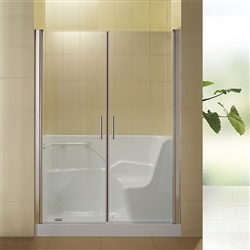
10 Questions Buyers Should Ask
- How easy is the entry and exit process?
- Does the tub prioritize comfort during longer bathing sessions?
- Is hydrotherapy included or available?
- How premium does the tub look in a finished bathroom?
- Does the door system feel modern and reliable?
- Is the product a good fit for aging-in-place planning?
- Will it suit both current and future accessibility needs?
- How does it compare with other known brands?
- Will it complement the rest of the bathroom design?
- Is it a product you would still be happy with years from now?
How to Use These Questions
These questions should be answered with the actual product specifications in front of you. Do not assume that two walk-in tubs with similar appearances will have the same threshold, door configuration, seat dimensions, water capacity, hydrotherapy package, or installation requirements.
Start with the requirements that cannot easily be changed after purchase: available floor area, door access, plumbing locations, electrical requirements, user mobility, and service access. Features such as finish, styling, jets, and accessories can then be compared after the basic fit has been confirmed.
For projects involving older adults or users with limited mobility, it is also useful to review the complete bathroom circulation path from the room entrance to the tub rather than evaluating the tub as an isolated fixture.

A Category Example Worth Reviewing
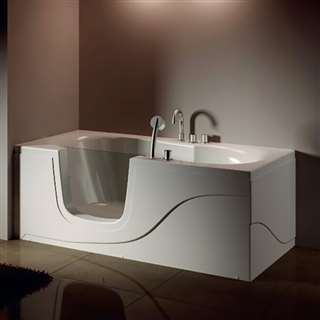
For readers looking at modern glass-door options, the BathSelect Rio High Glass Door Walk-in Tub Set is a strong example of a product positioned at the meeting point of accessibility, hydrotherapy, and upscale bathroom design.
What to Verify on the Product Page
- Overall exterior dimensions and available installation space.
- Door location, opening direction, and clearance around nearby fixtures.
- Interior seating dimensions and bathing position.
- Threshold and entry configuration for the intended user.
- Included and optional hydrotherapy functions.
- Required plumbing and electrical connections.
- Drain configuration and hot-water requirements.
- Service access for pumps, valves, controls, and other components.
- Warranty terms and availability of replacement parts.
Product photography is useful for understanding appearance, but the final decision should be based on dimensional drawings, installation information, technical specifications, and the conditions of the actual bathroom.
Other Brands Commonly Compared
Buyers often compare BathSelect with names such as Kohler , Jacuzzi, American Standard, and occasionally luxury-fixture brands like FontanaShowers when evaluating the broader feel of a premium bathroom project.
Compare the Specification, Not Only the Brand Name
A meaningful brand comparison should use the same criteria for every model. Compare dimensions, entry configuration, seating comfort, controls, water-management features, installation requirements, serviceability, warranty, replacement parts, finish options, and documented technical information.
The strongest choice is not necessarily the model with the longest feature list. Buyers should prioritize the features that solve the needs of the actual user and fit the physical conditions of the bathroom. A simpler system with better fit, easier maintenance, and clearer documentation may be more appropriate than a feature-heavy model that complicates installation or service.

Why this article type matters
Buying guides often attract backlinks and rank for broader phrases that individual product pages do not capture as easily on their own.
Think Beyond the Initial Purchase
Walk-in tubs are long-term fixtures, so ownership considerations should be part of the buying decision from the beginning. Ask how components will be serviced, how accessible pumps and controls are, which parts may eventually require replacement, and whether routine cleaning can be performed without complicated disassembly.
For remodel projects, buyers should also confirm that the installation plan accounts for delivery access, removal of the existing fixture, finished wall and floor conditions, plumbing modifications, electrical work where required, waterproofing, and final service access.
What to Compare Before Choosing a Walk-In Tub
A walk-in tub should be evaluated as part of the complete bathroom environment rather than as a stand-alone fixture. Before ordering, compare the tub configuration with the available space, user needs, plumbing and electrical conditions, hot-water capacity, installation access, safety features, and long-term service requirements.
For accessibility-focused projects, buyers and design teams should also coordinate bathtub selection with the U.S. Access Board bathing-room guidance , which addresses accessible bathing considerations including clearances, seats, grab bars, controls, and related bathing components.
1. Tub Type and Intended Use
Begin by determining how the tub will actually be used. Walk-in tubs may be configured primarily for soaking or may include air massage, water jets, handheld shower components, heated surfaces, or other comfort features. Additional features can affect installation requirements, electrical coordination, maintenance, and service access, so they should be selected according to actual user needs rather than feature count alone.
2. Bathroom Space, Dimensions and Access
Verify the complete product dimensions against the proposed bathroom layout. Consider not only the tub footprint but also the delivery path, surrounding fixtures, approach space, circulation, door operation, and access required for installation and future servicing. Where accessibility is part of the project, coordinate these conditions with the broader ADA Accessible Bathroom Layouts planning guidance.
3. Door Configuration and Entry
Review the entry threshold and whether the selected model uses an inward- or outward-opening door. Door configuration can affect usable interior space, transfer conditions, bathroom clearance, and the space required outside the tub. Confirm the actual manufacturer dimensions and door-swing requirements before finalizing the surrounding layout.
4. Seating, Controls and Safety Features
Evaluate the seat, grab-bar locations, control reach, entry conditions, slip-resistant surfaces, handheld shower components, and water-temperature controls as a coordinated system. Do not assume that a product marketed as accessible automatically makes the completed bathroom compliant with accessibility requirements.
For projects subject to accessibility requirements, the U.S. Access Board provides technical guidance for accessible bathtubs, including requirements addressing seats, grab bars, controls, shower spray units, and related clearances. Review U.S. Access Board Bathing Room Guidance.
5. Plumbing, Drainage and Hot-Water Capacity
A larger or deeper walk-in tub can place different demands on the existing bathroom infrastructure. Confirm supply connections, drain location, drainage requirements, available water pressure, and the hot-water demand of the selected model. Because the user typically enters before filling and remains inside while the tub drains, fill and drain performance can directly affect everyday comfort and usability. The existing water-heating system should therefore be reviewed against the manufacturer’s published tub capacity and operating requirements rather than assuming it can support the new fixture.
6. Electrical Requirements for Powered Features
Models with pumps, air systems, heaters, lighting, electronic controls, or other powered features may require electrical coordination in addition to conventional plumbing work. Review the current manufacturer’s installation documentation and coordinate required electrical work with qualified professionals before installation begins.
7. Installation and Service Access
Consider how the tub will enter the building and bathroom, whether surrounding finishes or existing fixtures must be removed, and how installers will reach plumbing and electrical connections. After installation, pumps, valves, controls, seals, drains, and other serviceable components should remain reasonably accessible where required by the product design.
8. Warranty, Documentation and Replacement Parts
Do not compare warranties only by their advertised duration. Review what is actually covered, including the tub structure, door and seal, plumbing components, pumps, controls, labor where applicable, and any conditions tied to professional installation. Buyers should also confirm the availability of technical documentation, service support, and replacement parts before ordering.
Walk-In Tub Buyer Checklist Before Ordering
- Measure the available bathroom space and access path.
- Confirm the exact product dimensions from current technical documentation.
- Review the door location and opening clearance.
- Check seating position, entry threshold, controls, and user reach.
- Confirm plumbing rough-in and drainage requirements.
- Verify electrical requirements for powered features when applicable.
- Assess hot-water demand in relation to the existing water-heating system.
- Review hydrotherapy and comfort features that the user will actually use.
- Confirm access for inspection, service, and future component replacement.
- Review warranty terms, installation requirements, and replacement-part support.
- Coordinate the tub with grab bars, flooring, circulation, and surrounding fixtures. For broader accessibility and circulation planning, review our ADA Accessible Bathroom Layouts guide.
- Have the final installation conditions reviewed before ordering when the project involves significant remodeling or accessibility planning.
Walk-In Tub Buying FAQ
What should I compare first when choosing a walk-in tub?
Start with physical fit and user needs: room dimensions, access path, door configuration, entry threshold, seating position, controls, plumbing conditions, and service access. Decorative finish and optional features should be considered after these fundamentals are confirmed.
Does buying a walk-in tub automatically make a bathroom ADA compliant?
No. Accessibility depends on the complete installation and surrounding bathroom layout, not simply the product category. Clearances, approach, controls, circulation, grab bars, plumbing conditions, and applicable accessibility requirements should be reviewed for the specific project.
What should be checked before installation begins?
Confirm final product dimensions, plumbing connections, drainage, water-heating capacity, electrical requirements where applicable, door clearance, floor and wall conditions, waterproofing, and future service access before the installation is finalized.
Is hydrotherapy the most important feature?
Not necessarily. Hydrotherapy can be valuable for some buyers, but safe entry, comfortable seating, suitable controls, proper installation, maintenance access, and long-term usability may be more important depending on the user and project.
Why should serviceability be considered before purchase?
Pumps, valves, controls, seals, and other components may require inspection or service during the life of the tub. Planning accessible service locations can reduce disruption and avoid unnecessary removal of surrounding finishes later.