
Modern Commercial Restroom Design: Balancing Aesthetics and Functionality
In today’s built environment, the commercial restroom is not relegated to the back corner of a facility, out of sight and out of mind. Instead, it has become a design element that is at the forefront of a brand’s identity, comfort, hygiene, and sustainability. From high-traffic airport restrooms to boutique hotels, offices, and beyond, contemporary commercial restroom design focuses on delivering a seamless balance of aesthetics, functionality, and the integration of all three into a beautiful, functional, and technologically advanced space.

The Evolution of the Modern Restroom
In the past, restroom design was based primarily on functionality. Factors such as durability, maintenance of hygiene, and accessibility were the key aspects of restroom design. But the needs of the contemporary user have changed dramatically. The contemporary user, whether a customer or an employee, perceives the restroom as an expression of the entire facility’s standards.
Today, restroom designers understand that a well-designed restroom is not only an important factor for customer satisfaction, brand image, and facility efficiency but also an integral part of the entire space’s design. The contemporary commercial restroom is an expression of design excellence with a strong emphasis on aesthetics and sustainability.
Aesthetics: Creating a Sense of Comfort and Brand Identity
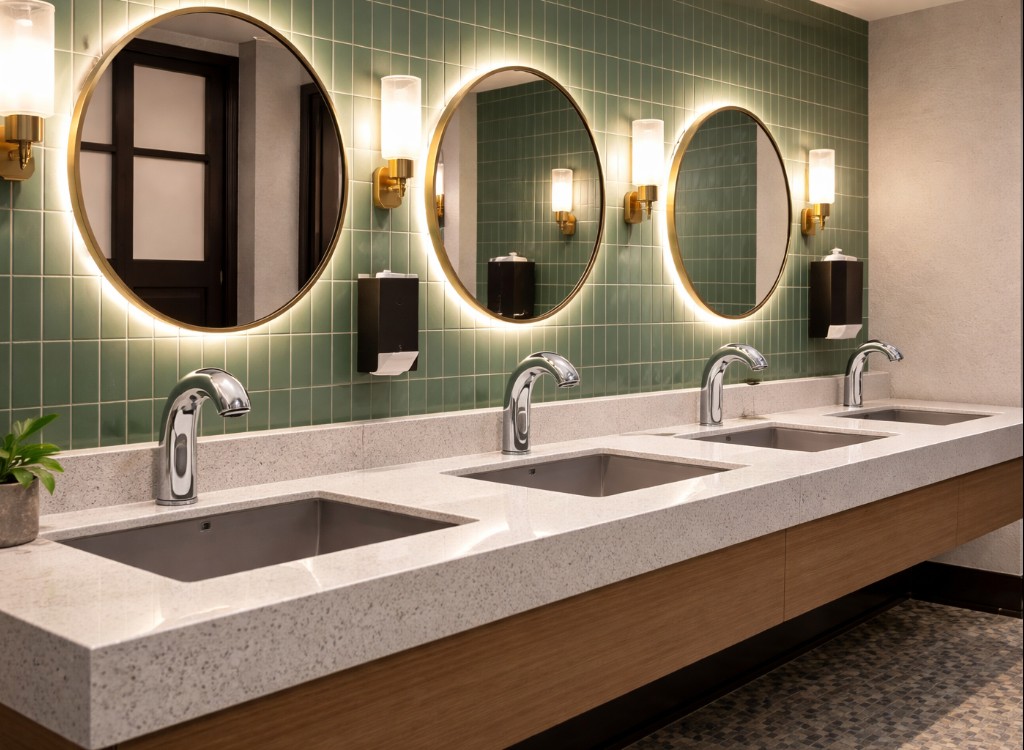
Modern restroom design is as much about visual appeal as it is about functionality. Sleek lines, minimalistic fixtures, and high-quality finishes can transform an ordinary restroom into a refined, spa-like experience. Whether through elegant tilework, statement lighting, or the use of natural materials such as stone and wood accents, the visual design of a restroom contributes significantly to the ambiance of the entire facility.
Color schemes are also used strategically to elicit certain moods or perceptions. Neutral colors can imply a sense of cleanliness or serenity, whereas vibrant colors or metallic colors can imply innovation or sophistication—important factors for hospitality or retail brands that need to leave a lasting impression.
In addition, branding is increasingly making its way into restroom design. Custom signage, coordinated finishes, and unique fixture selections can subtly reinforce a company’s image and values. For example, an eco-conscious brand may showcase sustainability through recycled materials and water-saving fixtures, while a luxury hotel might emphasize opulence with sensor-activated gold-tone faucets and ambient lighting.
Functionality: Meeting the Demands of High-Traffic Spaces
Beauty is only skin-deep if functionality is lacking. A restroom that is visually stunning but lacks functionality will not remain beautiful for long. Functionality is about efficiency, hygiene, accessibility, and durability—all key aspects of effective commercial restroom design.
Touchless technology has become the new norm for hygiene and functionality. Touchless faucets, soap dispensers, and even toilet flush valves help prevent the spread of disease-causing microorganisms while conserving water. Touchless lighting fixtures and hand dryers make for efficient and environmentally friendly options.
Layout plays an equally critical role. Designers are paying closer attention to user flow—ensuring that entrances, sinks, stalls, and exits are positioned for ease of movement and privacy. Proper ventilation systems are integrated to maintain air quality and prevent odor buildup, which directly influences how users perceive cleanliness.
Furthermore, materials are selected for their ability to withstand constant use. Nonporous surfaces, anti-fingerprint finishes, and antimicrobial coatings contribute to both longevity and hygiene. Functionality is also enhanced by ensuring that fixtures are easy to maintain, reducing downtime and cleaning costs for facility managers.

Accessibility and Inclusivity
Inclusive design is a hallmark of modern restroom architecture. Accessibility is no longer a compliance requirement—it’s a design priority. ADA-compliant layouts, gender-neutral facilities, and family-friendly amenities reflect a commitment to inclusivity and social responsibility.
Touch-free door systems, wider stalls, and thoughtfully placed grab bars allow all users to navigate the space comfortably. In larger facilities, the addition of baby-changing stations, family restrooms, and gender-neutral options supports a more welcoming environment for everyone.
Sustainability: A Core Element of Modern Design
Environmental responsibility is at the heart of modern restroom planning. The integration of green building principles has transformed the way designers approach water usage, energy consumption, and material selection.
Low-flow faucets, dual-flush toilets, and sensor-controlled urinals significantly reduce water waste. LED lighting and occupancy sensors cut energy consumption, while recycled or rapidly renewable materials—such as bamboo, terrazzo, or porcelain tile—enhance sustainability without sacrificing visual appeal.
These features not only meet environmental standards but also lower long-term operational costs, making sustainability both a moral and financial advantage for commercial property owners.
The Role of Smart Technology
The rise of smart restroom technology is redefining what functionality means. IoT-enabled fixtures can now monitor usage, detect leaks, and alert maintenance teams before issues escalate. Smart dispensers provide data on soap or paper towel levels, helping facility managers optimize cleaning schedules and reduce waste.
These innovations contribute to a cleaner, more efficient, and cost-effective operation—offering a glimpse into the future of commercial restroom management.
Achieving Balance: The Designer’s Challenge
The essence of modern restroom design lies in balance. Overemphasizing aesthetics can lead to impractical layouts or maintenance challenges, while focusing solely on functionality can result in sterile, uninspired environments. The most successful restrooms seamlessly integrate both.
Architects, interior designers, and facility planners must collaborate closely—selecting fixtures, materials, and technologies that not only look appealing but also perform flawlessly in demanding environments. This balanced approach ensures that users experience comfort, cleanliness, and convenience, while facility owners benefit from durability and reduced upkeep.
Conclusion
Modern commercial restroom design is more than a trend—it’s an evolution in how businesses express their values through space. By blending aesthetics with functionality, designers are creating environments that elevate the user experience, promote hygiene and inclusivity, and demonstrate a strong commitment to sustainability.
Ultimately, a restroom is not only functional; it is a statement. A statement of care, innovation, and modernity that says a whole lot about the business that puts its name on the door.