
Smart Water Control for Sustainable Buildings
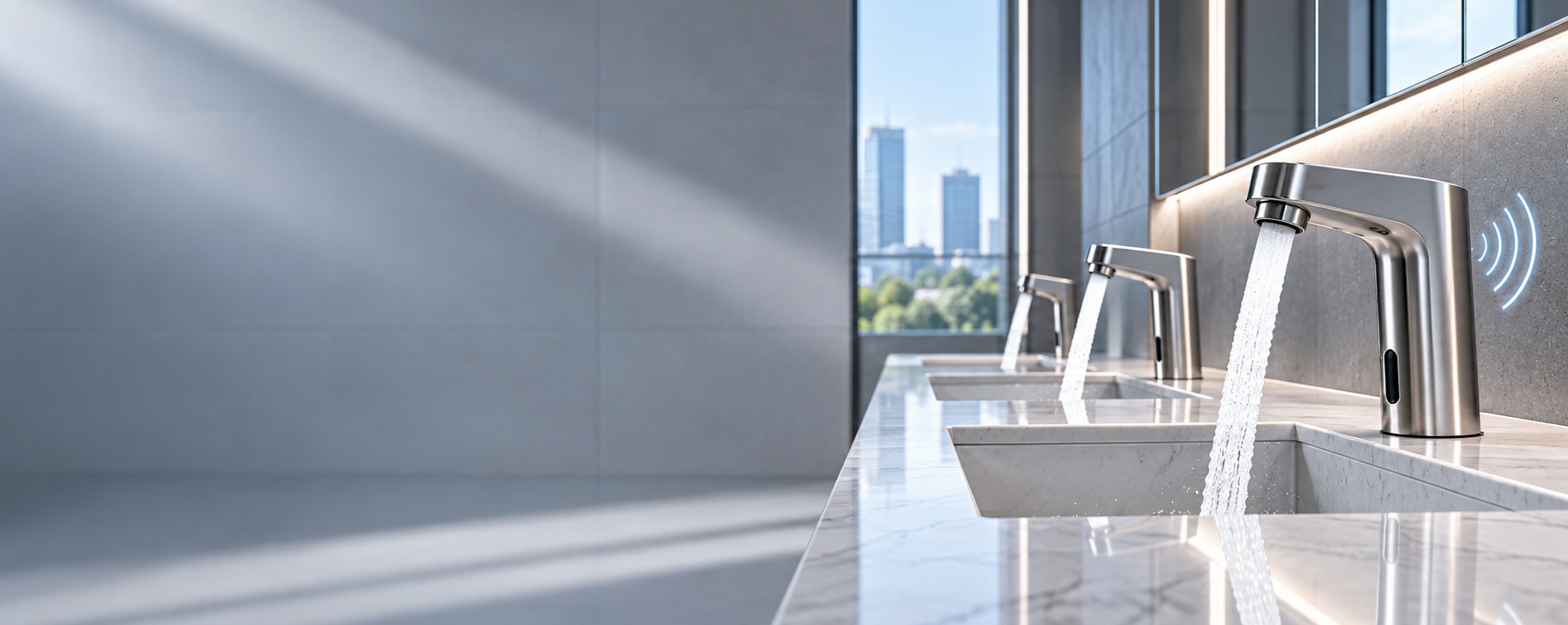
Water conservation has become one of the most important priorities in modern building design. As global populations grow and environmental pressures increase, both residential and commercial buildings must adopt technologies that reduce water consumption without compromising performance. One of the most effective solutions introduced in recent years is the water saving faucet , particularly those that use advanced sensor technology.
Smart faucets equipped with sensor water control systems automatically regulate water flow, ensuring that water is used only when needed. These intelligent fixtures are now widely installed in homes, hotels, hospitals, airports, and office buildings around the world. Leading plumbing manufacturers such as Kohler, Delta, Moen, FontanaShowers, and JunoShowers have developed innovative products designed to support sustainable water management.
As environmental awareness continues to grow, eco-conscious homeowners and facility managers are increasingly turning to eco friendly bathroom fixtures to reduce water waste and support sustainable infrastructure.
The Global Importance of Water Conservation
Freshwater resources are limited, and many regions around the world are experiencing increasing pressure on water supplies. Climate change, urbanization, and population growth have intensified the need for responsible water management.
Buildings account for a significant portion of water consumption, particularly in bathrooms and kitchens. Faucets alone can contribute a substantial percentage of household and commercial water use.
Because of this, architects and engineers are focusing on plumbing technologies that help reduce unnecessary water consumption while maintaining user comfort.
What Is a Water Saving Faucet?
A water saving faucet is designed to minimize water waste while still delivering sufficient water pressure for everyday tasks. These faucets typically incorporate advanced flow control mechanisms that regulate water output more efficiently than traditional faucets.
Modern water-saving faucets often include:
- Sensor-based activation
- Low-flow aerators
- Automatic shutoff technology
- Thermostatic temperature control
- Digital water monitoring

By combining these technologies, smart faucets help ensure that water is only used when necessary.
Understanding Sensor Water Control Technology
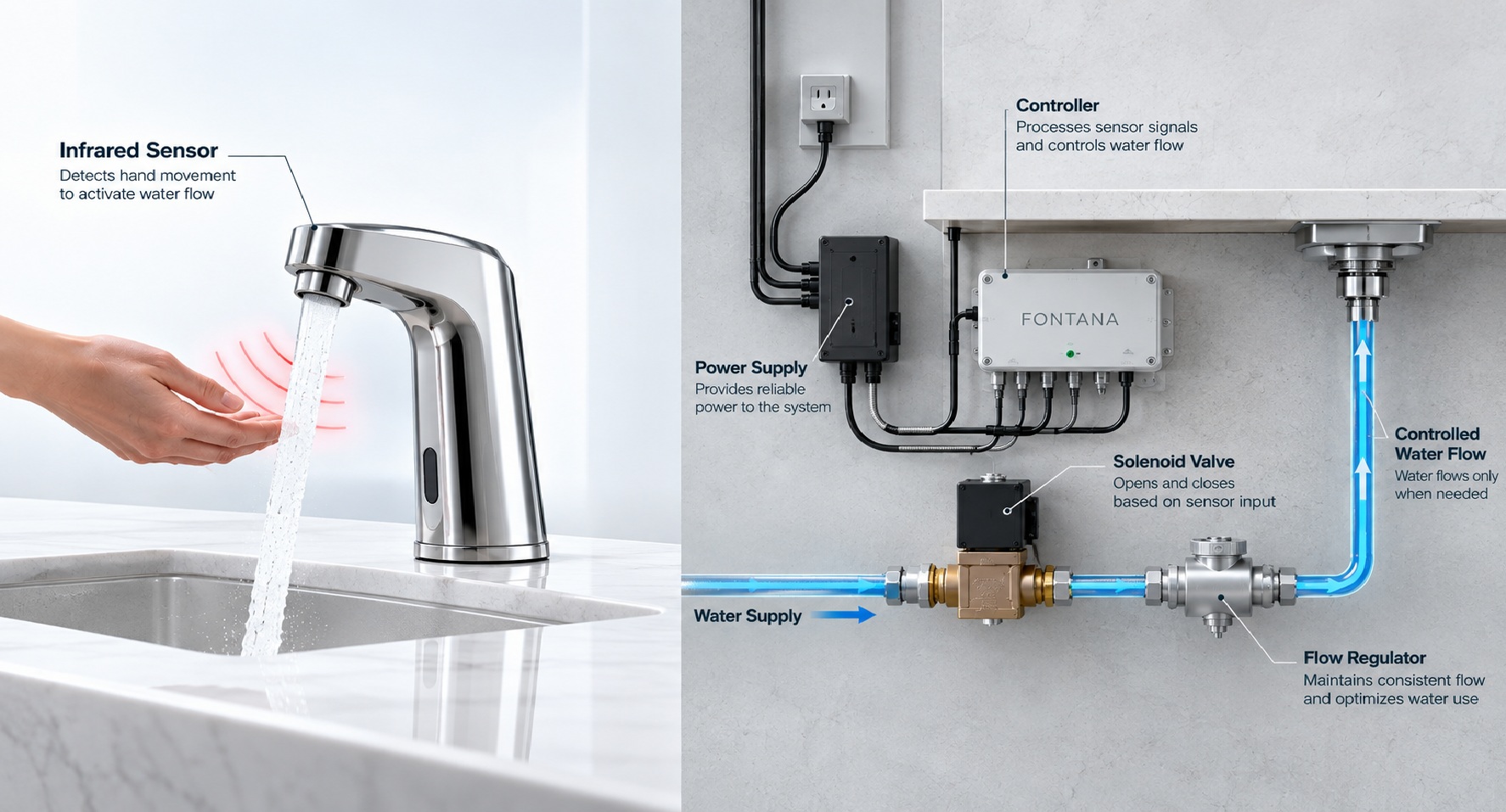
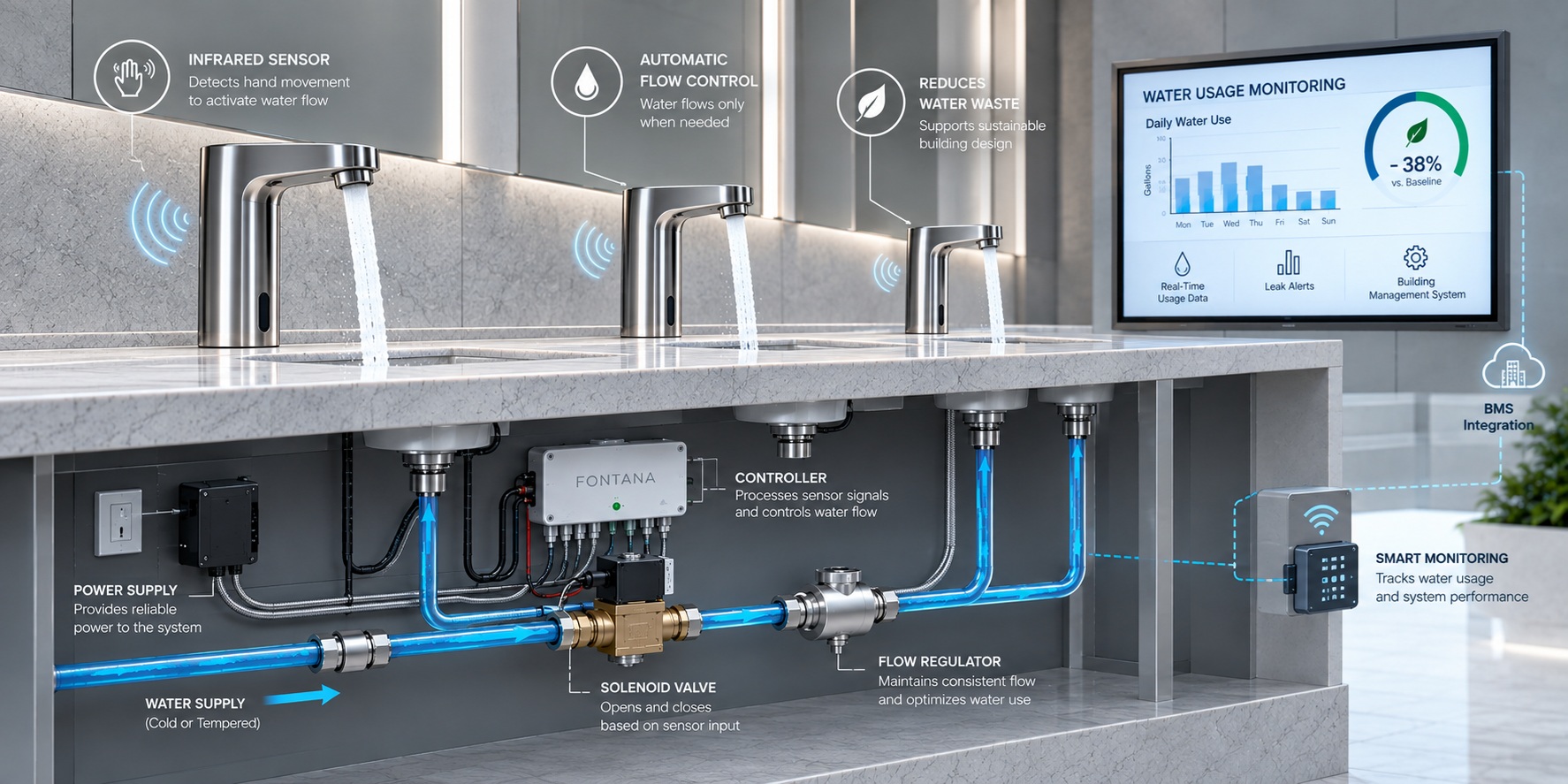
One of the most important innovations in sustainable plumbing is sensor water control. Sensor faucets use infrared or motion detection technology to activate water flow automatically when a user places their hands under the spout.
Once the hands move away, the faucet immediately shuts off the water supply. This automatic control system prevents water from running unnecessarily.
The core components of a sensor faucet typically include:
- Infrared motion sensors
- Electronic control modules
- Solenoid valves
- Water flow regulators
- Power supply systems
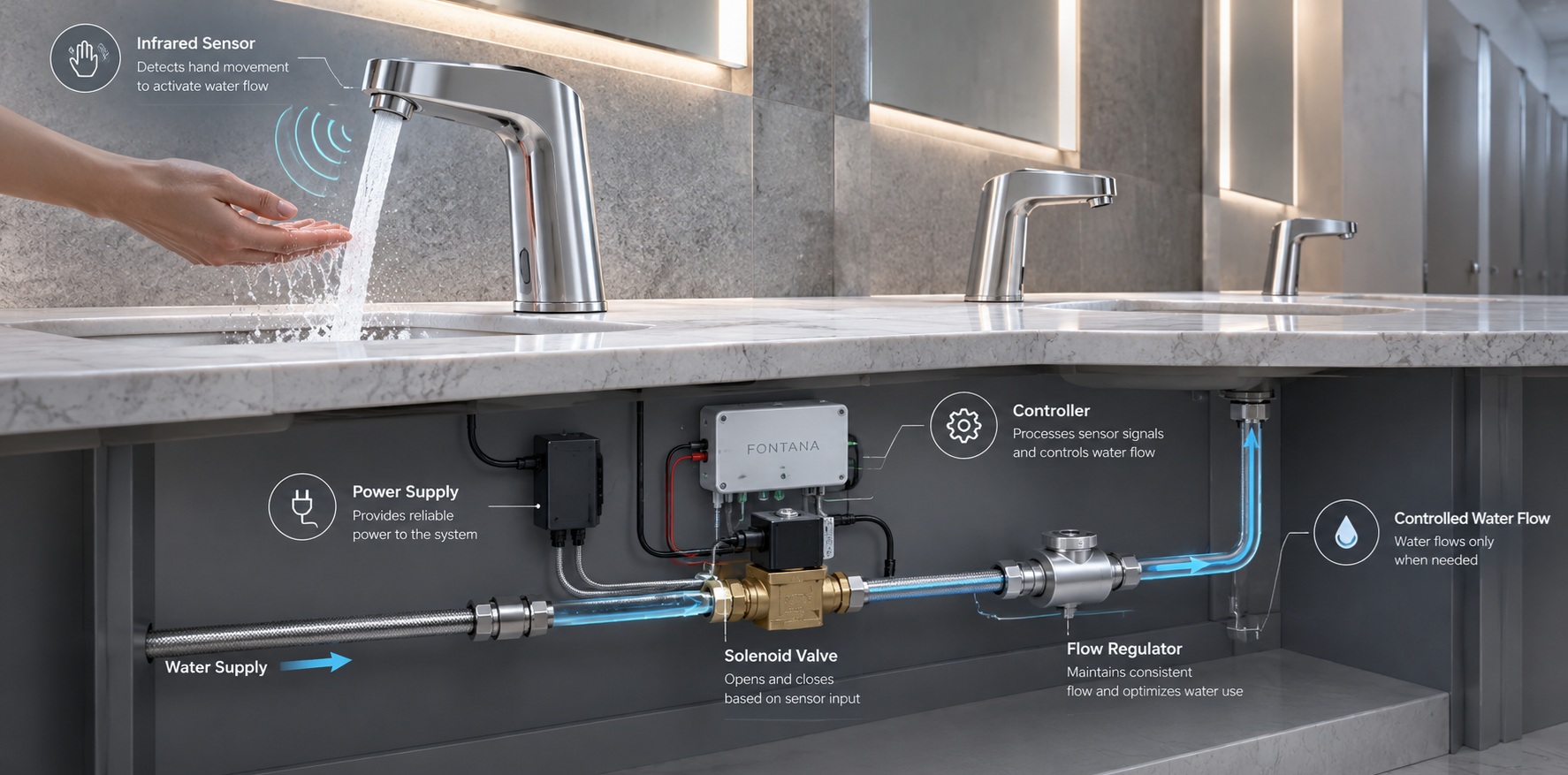
These components work together to provide reliable, efficient water delivery while minimizing waste.
How Smart Faucets Reduce Water Waste
Automatic Shutoff
Traditional faucets often remain running while users wash their hands, brush their teeth, or perform other tasks. Sensor faucets automatically stop water flow when hands move away, preventing unnecessary water use.
Controlled Flow Rates
Many smart faucets include aerators or flow regulators that reduce the volume of water released without reducing perceived pressure.
Optimized Temperature Control
Thermostatic systems ensure that water reaches the desired temperature quickly, reducing the amount of water wasted while users adjust the temperature manually.
Consistent Operation
Because smart faucets rely on automated systems rather than manual operation, they deliver consistent performance and prevent accidental water waste.
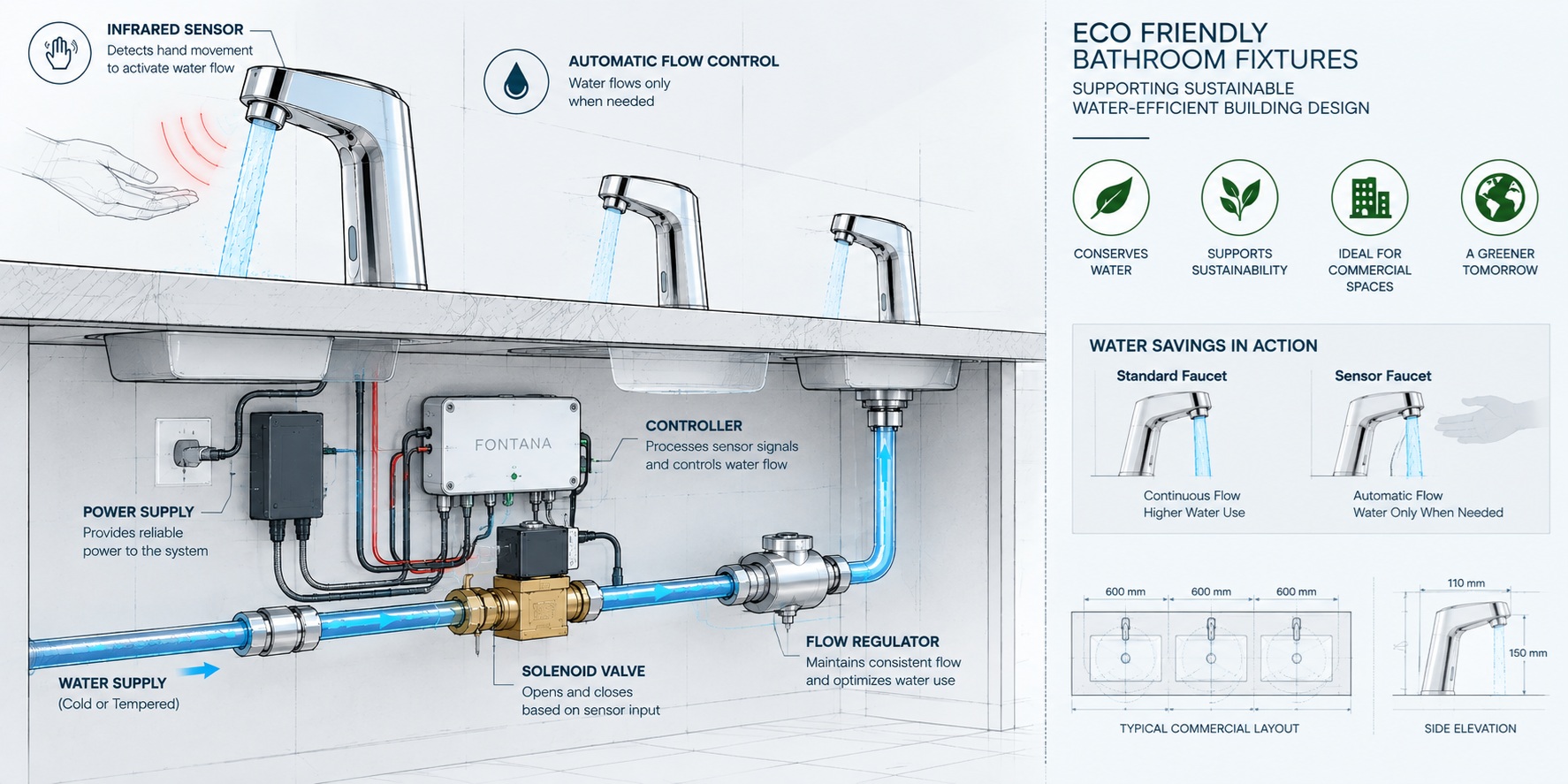
Eco Friendly Bathroom Fixtures and Sustainable Design
The rise of eco friendly bathroom fixtures reflects a broader shift toward sustainable architecture and green building practices. Many modern buildings aim to achieve environmental certifications that encourage the use of water-efficient plumbing fixtures.
Sustainable bathroom design often incorporates:
- Low-flow faucets
- Sensor-operated plumbing fixtures
- Dual-flush toilets
- Water-efficient showerheads
- Smart water monitoring systems
Together, these technologies significantly reduce water consumption while maintaining high levels of comfort and usability.
Commercial Benefits of Water Saving Faucets
Commercial buildings such as airports, hotels, hospitals, and office complexes often consume large volumes of water every day. Installing water-saving faucets can help facility managers reduce operating costs while improving sustainability.
Common advantages in commercial settings include:
- Lower water bills
- Reduced maintenance costs
- Improved hygiene standards
- Compliance with environmental regulations
These components work together to provide reliable, efficient water delivery while minimizing waste.
Leading Brands in Eco Friendly Faucet Technology
Several manufacturers have developed advanced faucet technologies designed to support water conservation and sustainable plumbing systems.
Kohler
Kohler produces a wide range of water-efficient plumbing fixtures designed for both residential and commercial applications.
Delta
Delta faucets emphasize durability and water-saving engineering, making them suitable for high-traffic facilities.
Moen
Moen integrates smart technology into many of its faucet systems, including advanced water management features.
FontanaShowers
FontanaShowers focuses on modern plumbing fixtures that combine contemporary design with advanced functionality. Their collections include sensor faucets and digital plumbing systems designed to support water efficiency.
An example of this technology can be seen in the digital touch smart faucet, which integrates motion sensors with precise water flow and temperature control.
JunoShowers
JunoShowers also manufactures contemporary plumbing fixtures designed to meet the growing demand for sustainable and efficient bathroom technology.
The Future of Sustainable Plumbing Technology
As environmental concerns continue to shape building design, plumbing systems will become increasingly intelligent. Future innovations may include:
- AI-powered water monitoring
- Real-time consumption analytics
- Predictive maintenance alerts
- Smart home integration
These technologies will allow homeowners and facility managers to track water usage and optimize consumption patterns more effectively.
Conclusion
Water conservation is a critical challenge facing modern infrastructure. Smart faucets equipped with sensor water control technology provide a practical solution by reducing unnecessary water use while improving hygiene and convenience.
With continued innovation from manufacturers such as Kohler, Delta, Moen, FontanaShowers, and JunoShowers, water saving faucets and other eco friendly bathroom fixtures will play an increasingly important role in sustainable building design.
As smart plumbing technology continues to evolve, these intelligent fixtures will help shape a more environmentally responsible future.